
Image by Ron Lach on Pexels
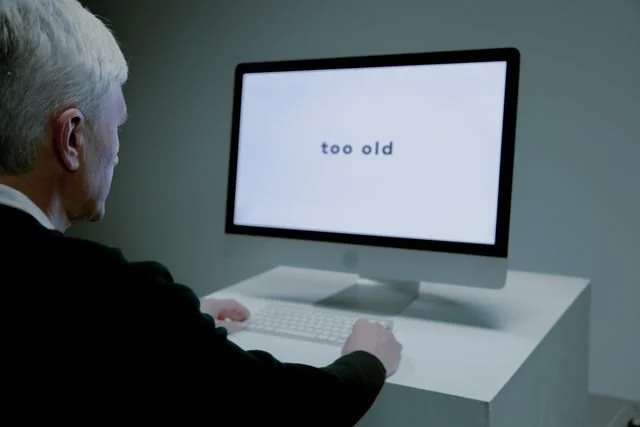
Ageism is out there. If you’re a capable career changer in your 50s or 60s, you’ve probably met the loopy assumption that getting older means getting less competent.
In a 2013 report by the Australian Human Rights Commission, 67% of Australians aged 54 and 50% aged 65+ cited ageism as the reason they were passed over for jobs.
In 2025, AgeInc‘s Voice of Experience research found 53% of 50+ Australian respondents experienced ageism when applying for work.
The assumption behind those numbers is wrong. Lived human experience and actual research show that although we might be at our physical best in our 20s and 30s, our overall mental functioning peaks between 55 and 65. Conscientiousness peaks around 65, and our brains can go on strengthening our age-enhanced decision-making powers into our 70s and 80s.
The stats match what my career change clients tell me. But it hasn’t stopped them seeking out and separating organisations that value their strong skills and invaluable experience from the ageist ones they’d rather not work with.
And like my clients, you dear reader, are not a stat.
If you’re reading this, chances are you’re a current or prospective midlife career changer. You’re a talented, capable human with decades of hard-won life and workplace wisdom, an impressive set of wildly transferable skills and a strong sense of what you do and don’t want the next chapter of your working life to look like.
So, let’s say, ‘pfft’ to the stats, and crack on with ways to anticipate and address ageism (and kick its bum).
What to do about workplace ageism
Here are 5 ways to stop ageism stalling your mid-life shift to a career that fits your values and lifestyle.
1. Get a head start
You know ageism exists, so when you’re feeling like it’s time for career reinvention … start preparing early.
Reframe how you think and talk about your career. Swap asking yourself, ‘What’s my next job and where will I find it?’ for ‘How can I create the next chapter of my professional life around my current skills?’ and ‘How can I do this and live the life I want?’
Have career change conversations
Two things will help you answer those questions effectively. Giving yourself permission to change careers and summoning the self-belief to make it happen.
For Angie, my career change client aged 62, ‘The hardest part was probably believing that I was allowed to change direction at this stage of my life.’ And as she also noted, ‘There is a lot of messaging around what you're supposed to do as you get older — slow down, be grateful for what you've achieved and make things comfortable.’
Read Angie’s story here.
One of the best ways to counter that messaging is to talk to people who have changed careers in their 50s and 60s. Because they're absolutely out there. Ask them about their experience of ageism – how did it show up? How did they deal with it? What do they know about it now that they wish they'd known at the start?
Sparky conversations with like-minded career changers can help build your confidence, curiosity and sense of what’s possible.
And while you are at it … have broader conversations with people in and outside your age group about organisations where ageism isn’t a thing. Get a heads-up on the workplaces that value age and experience. These are the ones that recognise the difference you can make and – the ones that deserve you.
Here are some tips on how to have confident career change conversations.
Put your decades of adapting and updating to work
Suss out in-demand skills – soft and hard ones – especially AI-proof ones. You’ll have loads of these already. Pick the skills you currently love to use or would like to learn more about. Then polish or upskill and practice.
If you need a nudge to kickstart that mindset shift, and an insight into why it might be tough to do, this one from Fernando Jiménez, ‘a connector of SMEs with experienced professionals who have already solved the problem they need to tackle’ (according to his LinkedIn profile) — is a good one and not just for portfolio career builders. ‘The hardest part is not choosing a portfolio career. It is learning to talk about thirty years of work as problems solved rather than positions held. Nobody teaches that inside a company, because inside a company the job title does the talking’.
2. Go your own way
Launching your own business, contracting, freelancing or even a portfolio or fractional career will give you autonomy and flexibility and allow grateful businesses to benefit from your bucket load of skills and experience.
Transitioning to a fractional, freelance, or portfolio career means you’ll (mostly) sidestep workplace ageism. You may still encounter ageism when applying for consulting contracts. But on the upside, all the personal and professional attributes that come with age may also give you a competitive advantage.
Fractional, freelance, portfolio career – What’s the difference?
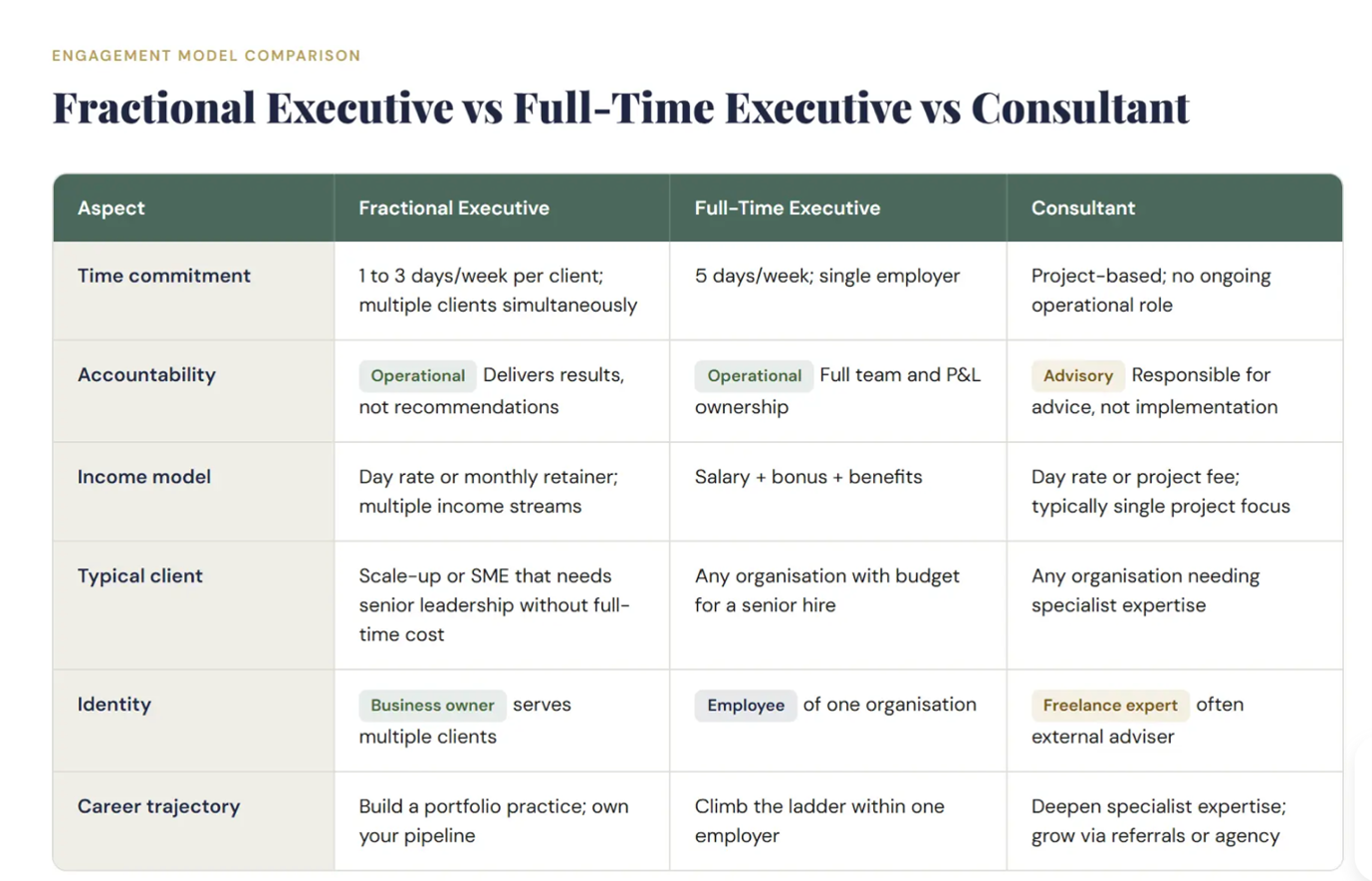
Need a heads-up on how going fractional differs from freelance consulting? Here you go.
A portfolio career may (for example) blend fractional and freelance work with volunteering and board memberships. As Iwana Johannsen, a portfolio career mentor, puts it in this Substack post, a portfolio career is, ’Your own version of a working life, built around your strengths, passions, constraints and the life you actually want.’
Here’s what I learned from my experience of the charms and challenges of a portfolio career.
‘Push – pull’. What’s driving the shift to fractional and freelancing?
Anti-ageism campaigner Stuart Neilson (#ImNotDoneYet) summarised the push – pull dynamic in this LinkedIn post by stating:
‘Although ageism is blocking work opportunities for the over 50s, I still see and hear of plenty of experienced executives actively choosing a portfolio career because they want autonomy, variety, flexibility and the ability to monetise expertise across several businesses.’
Commenting on this post, Lucy Standing, a mid-life career change specialist and co-author of ‘Age Against the Machine’, speaking about her clients, added,
‘Very few people (our average age is 53) want full-time - they will do it, but if they do, there MUST be some flexibility. People need to sort out parents; many want to go to the gym, many want to learn on the side and build up their next qualifications - but for most, there’s a sense that work now is more of a choice on their own terms.’
Read the complete discussion here.
Whether it’s ‘push or pull’ that propels you into flexible independent working, like any career change, the transition will likely trigger a period of wobble-inducing uncertainty. Believing that you absolutely can make the shift and maintaining the flexible mindset to get there can help you navigate this stage.
If you’re not keen, or not yet ready to go your own way, here are two ways to counter ageism in your job searching.
3. Flip the conventional CV wisdom
Don’t confine your career history to the conventional 3-5 years.
Present the big picture in undated (or broadly dated) chapters that showcase the value that only longevity, depth and breadth of experience can bring. Build your chapters around these things:
People – mention colleagues and team members (by name or by role) that you’ve mentored and championed
Systems – describe how you introduced| integrated |updated| adapted to business systems and processes that smoothed workflows, made people’s jobs easier and more fulfilling and improved productivity
Reputations – describe how decades of delivering damn fine customer service helped build brand awareness and loyalty, and supported your organisation to grow and change with their markets and attract new business; mention awards, community activities, media endorsements
Networks – talk about how you built and nurtured them and how your shared history and the strength of your connections supported the results you achieved throughout your career. Include networks in and beyond the industry you're targeting.
Leadership style – how it helped shape and sustain a healthy, collaborative workplace culture that underpinned your achievements and resolved conflicts over time.
4. Cause a stir in interviews
Get the jump on the elephant in the room by being candid about what sets you apart from younger applicants.
Start with what you will and won’t be doing in the role
As a midlife career changer, you’re ‘over’ competing and climbing. You’ve done that successfully in spades. You’re here to invest your energy in doing what decades of experience and expertise have equipped you to do best – problem-solving, mentoring, managing risk – calculating the ones worth taking and mitigating the harmful rest.
Spruik what you bring - fresh eyes, wise head, safe hands
You’re a seasoned professional. You bring the objectivity and nous to nail blind spots, bottlenecks, and opportunities that others are too close to see. You can be trusted to spot what’s glitchy and what’s good for growth. And you’re a clear, empathetic communicator of savvy next steps so you’ll help keep the team engaged and onside with finding solutions that work for everyone.
Show you’re panic-proof
You’ve navigated tech transformations, market shakedowns, recessions - seismic shifts of every kind. Your track record proves that you’ve mastered the art of steadying the ship. You keep calm, unfazed and focused when things go awry.
Show you’re across AI
Work on your AI-proof soft skills, but get up to speed on how AI is being used in the roles or sectors you’re targeting. Become a fluent, confident user of the relevant robot-driven tools. Show that you’re embracing the inevitable by being on the front foot with AI. And enjoy busting the myth that people over 60 can’t keep up with technology.
Describe how you’re decisive and have great judgement
You’ve spent decades making informed, pragmatic decisions backed by strong gut instinct. The result? Decisions that might take less experienced people weeks or months to research and reach, you can make in minutes or hours.
The great irony (and danger) of ageism is that it can deprive organisations of capabilities they desperately need and often say they want. These are the ones we generally accrue and refine with age — loyalty, consistency, pattern spotting, seriously sound problem-solving, accepting and giving constructive feedback, being OK with ambiguity and uncertainty, resolving gnarly conflicts. Whatever your pitch as a 50+ career changer, make selling those skills a priority.
5. Arm yourself against ageism’s barbs
Not winning work we want almost always stings and often dents our confidence and resolve. Losing out to ageism, especially when you’re deemed to be ‘overqualified’ — generally a euphemism for ‘too expensive,’ ‘too threatening’ or maybe just not looking ‘hip’ enough to fit in — can be particularly dispiriting.
Ageism is an irrational attack on an immutable part of who you are. And falling prey to it, even after you’ve aced every single strategy described above, can leave you feeling powerless.
This is the moment to do two things. Firstly, invoke the immense power of your career change cheer squad to remind you how agelessly brilliant you are and help you celebrate the virtues and value you bring, simply by not being ‘born yesterday.’
Secondly, take quiet satisfaction in remembering that any organisation that overlooks you because of your age is the one missing out.
Up for an agelessly brilliant career change? I can help.
Hi, I’m Jo Green, a Career Change Coach.
I help thoughtful professionals who feel stuck or unfulfilled in their work find a clearer direction and move into work that feels meaningful and aligned with who they are.
Since 2016 I’ve supported hundreds of people to reshape their careers – whether that means changing roles, starting something new, or finding work that contributes more positively to people or the planet.
If you're thinking about a career change and want structured support, you can learn more about my career change coaching here. Or you’re welcome to book a free 20-minute consultation to talk about where you’re at and whether coaching could help.




If you’re reading this, chances are you’re a current or prospective midlife career changer. You’re a talented, capable human with decades of hard-won life and workplace wisdom, an impressive set of wildly transferable skills and a strong sense of what you do and don’t want the next chapter of your working life to look like.
Ageism is out there. Here are 5 ways to stop ageism stalling your mid-life shift to a career that fits your values and lifestyle.