How Jane recalibrated retirement and re-found balance and fun
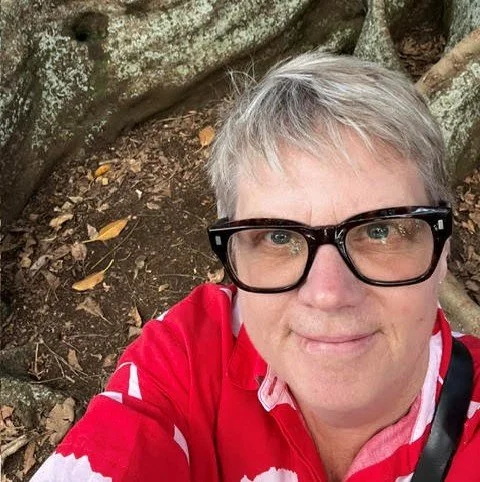
When Jane’s long public sector career lost its lustre, she decided to retire. At first, it wasn’t plain sailing. But with curiosity, courage and some coaching support, Jane reset her course to combine community work, study, staying fit and quiet contentment.
How were you feeling when you first retired?
I retired a few years earlier than I thought I would. For 20 years, I’d loved and (mostly) lived for my job in public sector regulation and policy. Then organisational and cultural change, and the fact that many of my friends were leaving, led me to question why I was still there and whether the work was still energising, meaningful and fun.
I realised that my job was no longer any of those things, so I decided to retire. In hindsight, I wasn’t as prepared as I might have been. I just stopped. I slept a lot (what a luxury that was!), I planned a big trip around my nephew’s wedding in Scotland, and I decluttered my small flat.
Decluttering was cathartic. I got rid of stuff I’d held on to out of habit and things I didn’t need any more, including my work clothes. It took me a while, but it was very satisfying, and a sign of things to come. Environment matters. I made mine more spacious — simpler, clearer and more enjoyable to live in.
What did you do next?
I did some home-based research for a great organisation. This was a volunteer role in my former field, arranged through one of my old colleagues. But it was home-based and isolating.
Then I got confined to bed with the flu, with loads of time to rethink what I really wanted. I realised I wanted to be useful - to help, but not in the field I used to get paid in, and not on my own.
Now I was really stuck. I knew what I didn’t want, but I had no idea how or where to begin working on what I did want.
The remote research I was doing wasn’t right for me, but I felt guilty about giving it up. I felt I’d let my friend and the organisation down. I was scared about picking another ‘wrong thing.' I spun and spiralled for a few months before deciding I needed to ask for help.
What help did you get?
I’d come across Jo’s website ages ago, and obviously there was a reason it stayed in my head. I was wary of fronting up depressed and teary to a Zoom call with a total stranger. But Jo’s pre-meeting questions about what might be getting in the way of finding work I’d love, and her empathy and kindness when we met, soon calmed and reassured me.
What were the most useful parts of the process with Jo?
Apart from (and it’s a huge ‘apart from’) Jo’s immense kindness, three things really helped:
Firstly, her coaching gave me permission to discover and do what I want, instead of focusing on what I thought I ‘should or could’ do. For example, libraries are my places of comfort and joy, and I’d long thought I ‘should’ volunteer in one. Coaching helped me realise that how I feel about libraries and where they sit in my world didn’t include needing or indeed wanting to turn up to work in one.
Secondly, I got insight into how I deal with expectations and how that may have been holding me back. One of the many useful tools I used with Jo was Gretchen Rubin’s 4 Tendencies. Finding out that I’m an Obliger helped me understand my career-long (and, to be frank, life-long) habit of saying, ‘Yes, that’s fine, I’ll do that,’ when I needed to be saying, ‘No thanks, that’s not for me.’
As a classic Obliger, I’d often put meeting other people’s expectations before doing what was best for me. Realising this freed me up to focus on what I needed. I discovered that I could set a path that prioritised what I wanted and put positive boundaries in place to protect it. I still want to help others, but on my own guilt-free terms.
Thirdly, the program's overall structure and pace gave me the chance to explore things slowly and thoughtfully. The exercises and challenges were perfect for figuring out how I wanted to live this chapter of my life. I realised that it’s perfectly OK and entirely possible to combine structured time, flexibility and variety.
What are you doing now?
I found the balance that works for me: helping others, being part of my community, studying, exercising and enjoying my alone time. I volunteer - once a week helping disadvantaged people and in a community garden. I do regular Pilates and weight training with a group of women. I’m studying part-time — a Diploma of Family History at the University of Tasmania. I’d begun learning the piano (theory and practice) before I retired, and I’m continuing with that. I also get to lie around a lot, reading, cat at my side. It’s pretty good.
What’s changed after working with Jo?
I’m better at saying ‘no.’ And I’m more confident about doing what I want to do, instead of what others might expect me to do.
I’ve given myself guilt-free permission to try new things, out of curiosity and a sense of fun.
I’m totally fine with including doing nothing as part of my routine.
What 3 tips would you give people in the same or similar situation?
Take time to stop, breathe and figure out what’s working NOW.
Simplify and declutter. Take a good look at your living environment and clear out ‘stuff’ you no longer need or use. Apply the same principle to people and activities.
Boldness is a good thing.
Looking for help with your retirement? Take a look at how I could help.
Hi, I’m Jo Green, a Career Change and Retirement Coach.
I've been helping people reinvent themselves since 2016. If you need help building a retired or semi-retired life that fits who you are right now, I can help. We’ll figure out what you want and what you need to do more of, less of, or differently to build that life.
I have a coaching qualification from CoachU, and I’m an Advanced Certified Coach through Careershifters and Firework.
If you’d like to chat, please book in a time here.