Curiosity, courage and going after what she really wanted – how Angie changed careers at 62
At 62, Angie realised she had so much more to learn and to give.

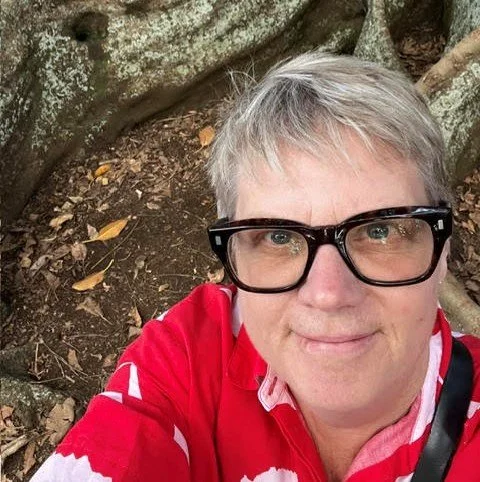
Image used to protect client privacy
On the outside, her life probably looked settled, successful and fine — but inside, Angie knew something was missing. She was restless and bored. But also curious, energised and excited about what could still be possible. So, she decided to stop seeing her age as a limitation and start seeing it as an advantage.
‘I have years of knowledge and professional and life experience and a clear understanding of who I am. I wanted to use all of that in a new and meaningful way.’
Why did you want to change?
I wanted more freedom, purpose and growth. I simply didn't want to continue doing what I had always done because it was familiar or safe.
Being single also made me think very seriously about my future. I want to create a career and life I am proud of — one that gives me independence, flexibility and opportunities to keep growing.
I realised I wasn't ready to slow down. In fact, I felt quite the opposite — I wanted to expand.
Was there a specific moment or event that made it clear you had to do something different?
There wasn't one dramatic event. It was more a growing sense of being too comfortable and of being capable of much more. Eventually I had to ask myself, ‘If I don't make a change now, when will I?’ And that question really triggered me.
What work were you doing previously?
My previous careers included real estate, event management, and personal assistance to high-net-worth individuals. Over many years, I'd built up a wealth of experience and a set of hugely transferable skills.
I was competent and comfortable in what I did, but I wanted to use my skills differently and explore areas that felt more aligned with who I am now.
What are you doing now?
I'm combining my love of personal development, gift-giving, and creating bespoke events by running courses and retreats for women.
It's early stages in this new career chapter, and already I love taking my experience, skills and perspective into something new. I'm drawing on everything I have learnt over the years and continuing to learn new things.
How did you go about making the shift?
The change didn't happen overnight. It started with a feeling that there had to be more.
I had to get honest with myself about what I wanted, rather than focusing on what I thought I "should" be doing at my age.
I began exploring possibilities and talking through what I really wanted. At first, I had plenty of questions. Was I too old? Could I really reinvent myself at 62? Would people take me seriously? Was I being unrealistic?
But the more I explored, the more excited I became.
I looked at my strengths, my experience, what energised me and what I wanted my future to look like. I also had to challenge some assumptions about starting something new later in life.
Working through those assumptions helped me realise that the bigger risk wasn't changing — it was staying in a place where I no longer felt fulfilled.
What help did you get?
Working with Jo was a really important part of the process that moved me from thinking about change to making it happen.
Sometimes we can be too close to our own situation to see what's possible.
Having someone outside of my own head to ask the right questions, challenge my thinking and help me see possibilities was incredibly valuable.
Jo helped me structure my thoughts and ideas. Instead of having a vague feeling that I wanted something different, I started to understand what I could offer, where I wanted to go and, most importantly, why I wanted to make the change.
That shift in mindset was enormous.
I stopped thinking of my career historically — as something that had already been ‘decided, done and dusted’ and started seeing it as something I could still create.
What were the most useful parts of the process with Jo?
The biggest thing was clarity.
Jo helped me step back and look at my experience, strengths and aspirations in a different way. She helped me recognise that I wasn't starting from scratch - I was bringing decades of experience with me.
I also found it incredibly useful to have someone challenge my limiting beliefs and encourage me to think bigger and be true to myself.
The coaching process gave me confidence, but more importantly, it gave me direction.
What about doubts, fears or limiting beliefs? How did you handle them?
The biggest ones were age and financial security in this career transition. I had to challenge the belief that being 62 meant I was somehow running out of opportunities.
I also worried about failure and what other people might think. There were moments when I questioned whether I was being sensible.
I handled the doubt demons by reminding myself of everything I've already overcome and learnt throughout my life.
I realised that I don't have to know everything before I begin. I just need to be willing to take the next step.
I also started replacing "I'm too old" with "I have experience that someone younger doesn't have."
That became a very powerful change in perspective.
What was the hardest part of changing careers?
The hardest part was probably believing that I was allowed to change direction at this stage of my life.
There is a lot of messaging around what you're supposed to do as you get older — slow down, be grateful for what you've achieved and make things comfortable.
But I didn't want comfortable. I wanted meaningful.
I also had to accept that being new at something can feel uncomfortable, particularly when you've spent years being experienced and confident in your previous career.
What have you learnt in the process?
I've learnt that it's never too late to reinvent yourself.
I've also learnt that experience is an asset. I don't need to compete with younger people by trying to be younger. I bring something different - perspective, resilience, emotional intelligence, knowledge and years of experience.
I've learnt that fear doesn't necessarily mean you shouldn't do something. Sometimes it simply means you're doing something that matters.
How are you feeling about the change now?
I feel excited. I feel like a door has opened, and I'm genuinely curious about where it could lead.
There is still uncertainty, of course, but I no longer see uncertainty as a reason to stop. I see it as part of creating something new.
Most importantly, I feel like I'm choosing my future rather than passively accepting it.
What do and don't you miss?
I miss some of the familiarity and confidence that comes with knowing exactly what you're doing. There is something comforting about being the experienced person in the room.
What I don't miss is feeling that I had reached my limit, lost my mojo or that there wasn't anywhere else for me to grow. And I absolutely don't miss the feeling of wondering, "Is this all there is?"
What do you enjoy most about your new career?
I love the sense of possibility.
I enjoy learning again and being challenged. I love meeting new people, developing new skills and knowing that I am still growing and focused on meaningful purpose.
There is also something very satisfying about proving to myself that I can create something new at this stage of my life.
What do you wish you'd done differently?
I wish I had started sooner.
Not necessarily because I should have changed careers years ago, but because I spent too much time questioning whether I was allowed to want something different.
I wish I had trusted myself earlier.
What 3 tips would you give others in the same situation?
Don't let your age decide what is possible for you. Your age is part of your story, not the defining boundary of your future. Your experience can be one of your greatest strengths.
Don't wait until you feel completely confident. Confidence often comes after you take the first steps, not before. You don't need to have the whole journey mapped out.
Get support and allow yourself to think bigger. Sometimes you need someone who can see possibilities that you can't yet see for yourself. Don't underestimate the value of having someone challenge you, encourage you and help you turn an idea into a real plan.
At 62, I don't feel like my career is coming to an end. I feel like I'm entering another chapter — one that I get to shape much more intentionally. And that, for me, is incredibly exciting.
Looking for tips on how to change careers in your 60s? Read my tips here.
Hi, I’m Jo Green, a Career Change Coach.
I help thoughtful professionals who feel stuck or unfulfilled in their work find a clearer direction and move into work that feels meaningful and aligned with who they are.
Since 2016 I’ve supported hundreds of people to reshape their careers – whether that means changing roles, starting something new, or finding work that contributes more positively to people or the planet.
If you're thinking about a career change and want structured support, you can learn more about my career change coaching here.
Or you’re welcome to book a free 20-minute consultation to talk about where you’re at and whether coaching could help.
Not sure it's time for coaching yet?
I can send you three questions to ask yourself before you change careers — so you leap towards the right thing, not just away from the wrong one. Free, and it takes about one quiet coffee to work through. Sign up here to get the free guide (and I'll send occasional career tips in my newsletter).