How to change career in your 30s

Photo by Brayan Guzman Cortez on Pexels
Changing careers when you’re supposed to be on the cusp of becoming a sorted and settled ‘responsible adult’ might feel reckless and scary.
Your inner critic and probably a few well-meaning, flesh-and-blood humans will tell you, ‘OMG, you’ve got so much to lose.’ While this might ring true (it’s not; more on that in a minute), you’ve also got much more to use. Namely, more of all the things that career changers need in spades — a track record, transferable skills, self-awareness, and networks.
So no, it’s not too late to change careers in your 30s. It’s not a reckless route that threatens your financial future and professional reputation. Nor will it undermine all the effort, education, and energy you’ve invested in a career you no longer love.
Square peg, round hole: How I changed careers in my 30s
I made my last career change at 33; my partner and I owned a house, were planning a wedding, and talking about starting a family. The stakes felt high in ways they hadn't in my 20s when a dud career change meant a bruised ego and a few uncomfortable months. Now it felt like the consequences of getting it wrong could ripple out much further — disrupting our finances, our plans, our future.
Curious about how I changed careers twice in my 20s? Read that blog.
At 33, I was seven years into my third career. As a project manager in the not-for-profit sector, I genuinely loved that my work was purposeful and made a difference. But I felt like a square peg in a round hole. Everyone around me seemed energised by our work, while I mostly felt deflated. I was stuck in a loop of big, important questions that I couldn’t answer.
Why haven't I figured out my career when everyone else seems to have? (I know now that many of them hadn't.)
What would it feel like to use my full potential? Will I ever find work that feels truly fulfilling — and like me?
How do I make a change when I need a stable income to cover real responsibilities outside of work?
I was burnt out. I kept getting sick. I was turning into someone I didn't particularly like — unmotivated, grumpy, going through the motions. Something had to give.
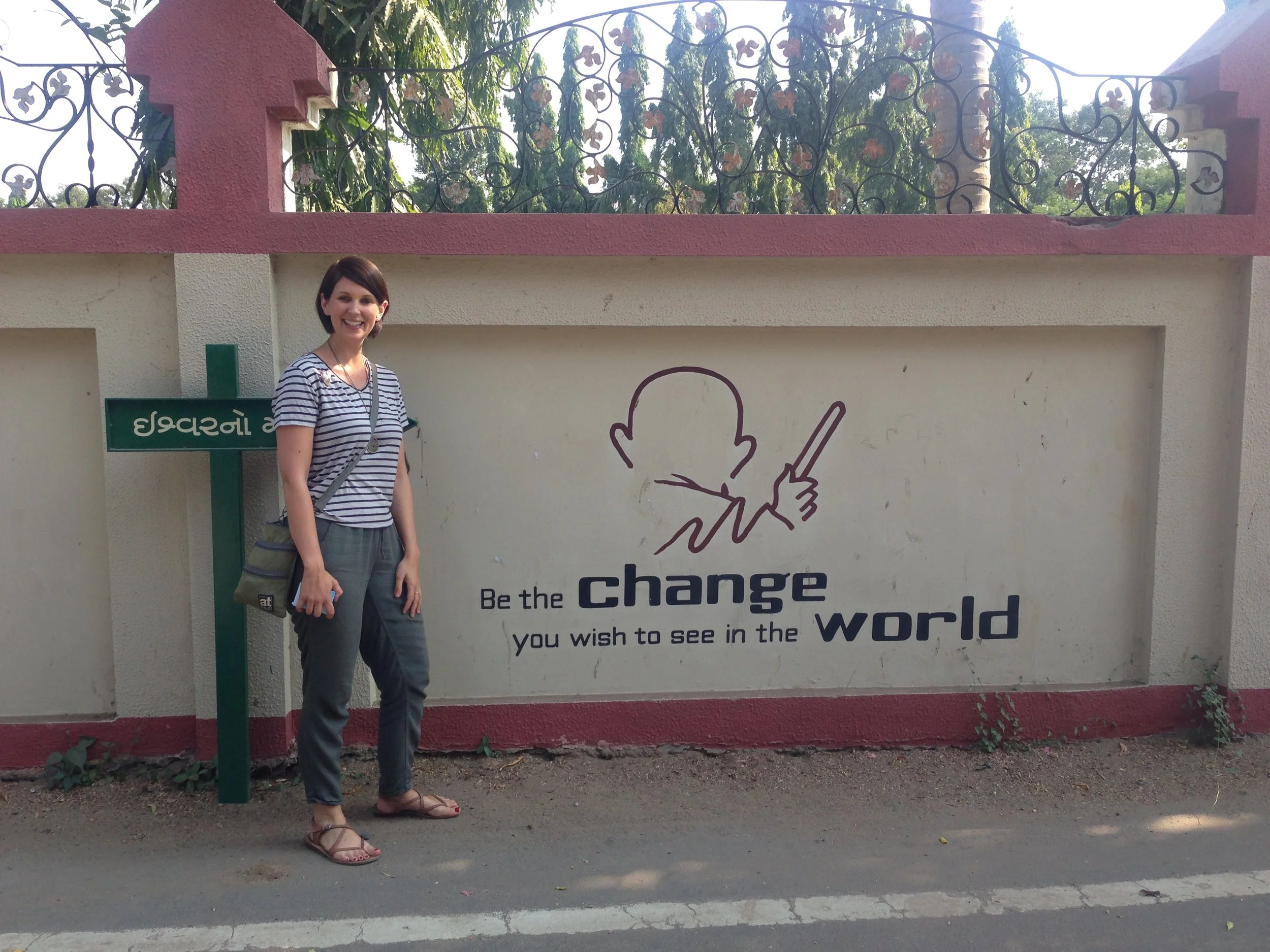
33 year old Jo her trip to India
Making space to figure things out
I knew I needed to take some proper time out for what I can only describe as a genuine soul-searching mission. So, I decided to use some of my savings to create that space by travelling. In India, I did a program designed to help people work out how to ‘be the change in the world’. I finished the program, eyes opened, and action focused. I came home with clarity that I hadn't had in years — and a plan. I would work part-time, study coaching, and start building a business.
Having a proper, honest conversation with my soon-to-be husband about our finances, our plans, and what each of us was willing to take on was one of the most important next steps in my career change. And it’s a step I recommend to every one of my clients navigating a career change with a partner. Because getting on the same page before making any big move makes everything easier.
Taking small(ish), steady steps
I didn’t make a clean leap. Over the next two years, I took on part-time not-for-profit contracts while completing more advanced coaching study. And slowly, but steadily, I figured out how to run, market and build my business.
Becoming Jo Green, Career Change Coach was a transition, not an overnight transformation. But I'm so glad I made the move.
If starting your own business is part of your career change plan, here’s what I discovered when I launched mine way back in 2016.
7 Grounding lessons I learned from starting my business.
7 Tips for changing careers in your 30s
Lay the groundwork: Funding first, thinking space second, motivation third and myth-busting fourth — then go for it
Tackle the warty-faced money monster
Money is almost always the first hurdle that stops you in your tracks. And that makes sense — by your 30s you might have a mortgage, children to raise, or ageing parents to care for. Maybe you’ve simply built a lifestyle you don't want to dismantle. The financial stakes in changing careers are high, and pretending otherwise doesn't help anyone.
But here's the thing: most people catastrophise about their finances without actually looking at them. Fear of the number is often worse than the number itself.
So, step one: sit down and stare the freaky money monster in the face.
The key steps:
Plan with your partner (if you have one). A career change affects both of you, and any wants, needs, fears, or assumptions left unspoken might trigger resentment later.
Work out the minimum amount you need coming into your household each month — no holidays, no luxuries, just the non-negotiables. Now you know your baseline.
Review your savings so you understand how much of a buffer you have to carry you through the change period — whether that's time to study, time to transition step by step or take a pay cut while you build experience in a new field.
Gather accurate intel on starting salaries (and how they progress) in fields you’re keen to pursue. Talk to people already working in the careers you're considering and make money part of the wider conversation about what it’s like working in their role or sector. If the numbers don't stack up initially, ask which roles in that field might be a better financial entry point. There's often more than one way in.
Your finance-figuring goal here is not to talk yourself out of a change — it's to assess your resources and come up with a plan that's grounded in reality rather than fear.
Money is most likely a constraint (along with a bunch of other grown-up responsibilities), but constraints needn’t styme change; they can simply shape sharper planning. Want more on wrangling the money monster?
4 Ways to fund your career change transition.
Make the time and space to think — then actually use it
Kickstarting your career change can’t happen on the sofa. It doesn't happen in the ten minutes before you fall asleep, or in the odd moment of frustration on a Monday morning when you're dreading the week ahead. It happens when you deliberately carve out a chunk of time to reflect, plan and treat the process like the serious project it is.
Finding the time and headspace to reflect on how you might change careers is one of the biggest practical challenges in your 30s. Life is full, and the list of things competing for your attention may be longer than it's ever been. Changing careers tends to get bumped to the bottom of that list. Months pass, and still, you're stuck in that not-so-good place.
Don’t let that happen. Ask yourself two questions:
Firstly, ‘When am I going to do this?’ Not, ‘When will I have the time?’—because that moment isn't coming. Take a forensic look at your week and find that space. An hour on Saturday morning before the house wakes up. A lunch break on Wednesdays. A commute with your phone face-down, and your thoughts turned inward. Block it in your diary like a meeting you can't cancel, because that's exactly what it is.
Secondly, ‘How do I quarantine my space?’ Do you need your partner to take the kids for a Sunday afternoon so you can focus fully? Do you need to temporarily step back from something outside of work to create breathing room? Do you need to have a deep conversation with someone about what you're trying to do and why you need their support? These are the unsexy logistics of career change — and they matter just as much as the soul-searching you’re about to do.
At this point, you’re primed to start figuring out what’s really driving your urge to change careers. Before you do that, take a moment to reality-check the strength of your self-belief. By answering this question.
Do you really believe you can change careers?
Get clear on what motivates and matters to you now
There’s a good chance the unfulfilling work you’re currently doing no longer matches the person you’ve become. The priorities and values that shape our careers in our (usually more straightforward) 20s change as our self-awareness, roles and responsibilities grow in our 30s. The salary that once felt like a prime motivator now feels insufficient on its own. Maybe you want work that fits around your life, not the other way around. Or perhaps you want to care more about what you're doing and see more tangible impacts from doing it.
Time to get specific. Because vague desires like "something more meaningful" or "better work-life balance" are a starting point, not a destination.
What’s missing that matters to you right now? Flexible hours? Being able to leave work at work? Autonomy and creative freedom? Building something of your own? Working with people, or finally getting away from them?
The more clearly you articulate what you're looking for, the better equipped you'll be to recognise it when you find it.
Prepare to test those ‘too late, too hard’ career change assumptions
OK, so you’ve got a grip on your finances, carved out a chunk of thinking and planning time and put it to excellent use. You’ve done some specific ‘nuts and bolts’ reflection on ‘why’ and ‘what’ needs to change.
So far so good. And just as you’re ready to make your next move, a school of backward-swimming fish, aka undermining assumptions, start messing with your head. Career change, like any other step into the unknown, can launch a bout of serious worry-warting about whether we’ve got what it takes to do things differently and well.
For career changers, these worries mostly come in ‘toos’ and often show up in the snarky voice of your inner critic or in ill-informed advice from well-intentioned humans; They sound like this:
Career change? You? No, no, no ….
You’re too late | too old | too inexperienced |timid
It’s too hard |too expensive | too complicated | too risky
All our limiting assumptions (not just ones around career change) have deep family, community and cultural roots. But with curiosity, patience, and some real-world testing we can shift them out of our way.
5 Career change assumptions and how to test them.
Explore these three ‘T’s — put your 30-something career change in perspective
‘I’m absolutely going to explode everything and start again from scratch,’ said no career changer ever. Although the urge to do that can hit hard when you’re feeling peak frustration, career changes that upend everything are rarer than [insert unicorn-shaped word of your choice].
Most often, they’re shaped by a combination of the following 3 Ts.

Photo by Pavel Danilyuk on Pexels
Transfers: In your 30s, your stash of experience, expertise and achievements is way more transferable than you might realise.
The key isn’t to ask what your background allows you to do next — it’s to get clear on what you really want, then review and reshape what you already have to help you get there.
Chances are you have loads of sought-after skills that will work across multiple industries. Make a list. Hint: include ones like communication, strategy, analysis, project management, and facilitation. Then get second and third and fourth opinions from trusted friends and colleagues and helpful strangers working in the fields you’re targeting.
Do the same thing with your strengths. List the ones you’re keen to use more or differently, not just what you’re good at.
Then make yourself a blush-worthy brag file. Compile a cracking list of projects and outcomes you’re proud of and prove how capable you are.
Finally, remember that, as my career change client Bec succinctly put it, ‘We all have transferable skills, and you don't need to tick every single box in a job advertisement. Back yourself and apply!’
Read Bec’s story - From talking about awesome things to making them happen.

Photo by Engin Akyurt on Pexels
Threads: Psychology, sustainability, research and social enterprise have fascinated me since forever. And looking back at my career path, I can now see how these four things that I love learning about and working with are threaded through every role I've ever had — even the ones that felt like wrong turns.
Those threads became the foundation of everything I do now. As a career change coach, I get to draw on and apply my skills and knowledge to help my clients find fulfilling, purpose-driven work.
Not sure how to untangle your threads?
Go beyond the blahs infesting your current career and search your work history for the recurring bits you loved — the tasks that felt effortless — the ones that kept you engaged even when a role was losing its lustre. These patterns and threads are clues for your current career change.
Start noticing the things that spark you up now. The topics and activities that energise you physically (raise your heart rate, perk up your ears) and mentally (kickstart lively conversations and send you down digital rabbit holes). Then follow up. Look for people, events, courses, books, films — anything that feeds the things that fascinate you. Chances are, once a sparky something grabs your attention, traces of it will start to pop up everywhere. This is happenstance; it can feel a bit magical, but it's mostly neurology — your brilliant brain simply starts showing you more of what you fancy.

Photo by Nataliya Vaitkevich on Pexels
Tweaks: One of the first things we explore in my coaching sessions is this: The problem? Is it the career or is it the job? Whatever your initial response, a career tweak may be the answer. Maybe it’s a sideways shift in your field, a similar role in a new field, a move to part-time so you’ve space to start an absorbing side gig? The possibilities are endless.
Small shift, big difference: could a career tweak work for you?
P.S Sometimes though, starting over is the solution.
Read Jimmy’s story - From software sales to financial advising.
Don’t go it alone
A career change in your 30s carries more psychological weight than it did in your 20s. Your inner critic is louder. Comparisons with your peers feel sharper. Fear of getting it wrong again — after all this time — can be paralysing.
And when the only person keeping track is you, weeks and months have a way of slipping past. Urgent things crowd out important ones. And career change — which is important but rarely urgent — keeps getting deferred.
Having a single someone or an entire cheer squad in your corner will help you carry that weight. A coach, a mentor, or a trusted friend will challenge your assumptions, help you see your blind spots, cheer you on when things get crunchy and hold you accountable throughout.
Getting accountability and support doesn’t have to be complicated. It can be as simple as sending your trusted human your weekly intentions every Monday morning and having them check in on Sunday to ask how you went. Or you might team up with a small group of people navigating similar transitions who meet monthly to share progress and keep each other honest.
The specifics of ‘who’ and ‘when’ matter less than the commitment. What you're doing is making yourself answerable to something beyond your willpower. And at a stage of life where willpower is already stretched in ten directions, external accountability can be the difference between a career change that happens and one that stays permanently on the to-do list.
The people who navigate career change most successfully at any age rarely do it entirely alone. They get support, and they give themselves permission to ask for it.
7 Game-changing ways others can support your career change.
Take your time
A career change in your 30s often (but not always) takes longer than in your 20s. There are more moving parts, more people to consider, more financial realities to navigate. My transition to career change coaching took two years.
Was I hesitating or procrastinating? I was not. I was following my plan.
Set a realistic timeline, build in financial runway where you can, and remember that a transition done slowly, mindfully and on your terms will almost always beat a panicky ‘frying-pan-to-fire’ leap.
How and when to quit your job - pick the right time and the right style.
Contemplating career change in your 30s? I’ve been there. Book a free chat.
Hi, I’m Jo Green, a Career Change Coach.
I help thoughtful professionals who feel stuck or unfulfilled in their work find a clearer direction and move into work that feels meaningful and aligned with who they are.
Since 2016 I’ve supported hundreds of people to reshape their careers – whether that means changing roles, starting something new, or finding work that contributes more positively to people or the planet.
If you're thinking about a career change and want structured support, you can learn more about my career change coaching here. Or you’re welcome to book a free 20-minute consultation to talk about where you’re at and whether coaching could help.
Not sure it's time for coaching yet?
I can send you three questions to ask yourself before you change careers — so you leap towards the right thing, not just away from the wrong one. Free, and it takes about one quiet coffee to work through. Sign up here to get the free guide (and I'll send occasional career tips in my newsletter).