Small shift, big difference - could a career tweak work for you?

Photo by Pixabay on Pexels
Few of us change careers on a whim. Mostly, we endure a long(ish) period of slow burn frustration and escalating fury at being stuck doing work we no longer love.
If this is you, as the pressure for change builds, you're often struck by a powerful urge to ditch everything. You want to chuck the whole, messy kit and caboodle, aka your current career and replace it with … right now, you may have zero to few clues, but you know that nothing short of a total career reinvention will do.
Course correction or complete career change?
One of the early things I help career change clients figure out is what precisely needs fixing or changing. Is it the job or is it the career?
Maybe something tangible has stopped working for you, like the hours or the working environment. Perhaps it's something more nuanced, like a lack of autonomy or support. Often, it's the realisation that your work no longer matches or serves what matters most – your values, lifestyle, or family commitments. Or perhaps it's how you're approaching work, not holding good boundaries or not asking for what you want or need.
But if your answer the questions …
'Would you stay in your role/company/field if whatever's causing you to fall out of love with it can be fixed?'
… turns out to be 'Yes', then you may need what my client, Urban Economist Astrid, called 'a course correction', not a complete career change.
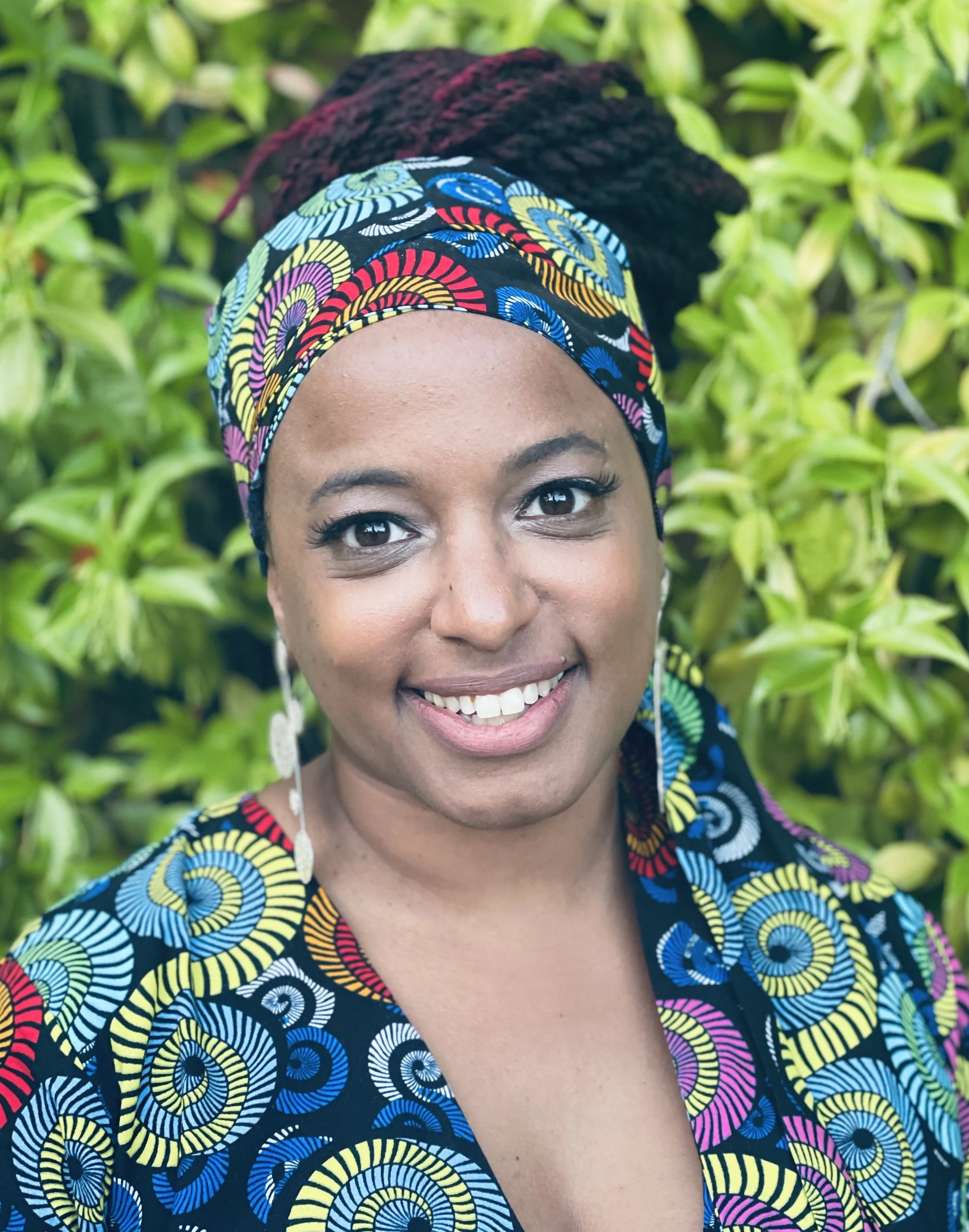
Astrid, Career Corrector
This realisation was a major turning point for Astrid,
'I just needed to realign my current path more closely with my values and long-term goals.'
Accepting that changing careers completely might be akin to 'throwing the baby out with the bathwater,' may not be easy.
For Astrid,
'It was still hard letting go of the idea that I needed to make a radical change. I had invested a lot of energy into imagining a total career pivot. Stepping away from that to deepen and refine my current trajectory was unexpectedly challenging. I needed to rethink what "change" really means.'
In fact, her course correction worked brilliantly. Astrid made space to do her Ph.D. – a long-held dream. She focused on becoming a feminist Urban Economist, a shift that truly aligns her work with her values. She has also widened her daily life by using her skills in new ways on boards and as a volunteer.
Flipping the 'giant steps' mindset
As Astrid pointed out, it can be challenging to shift from planning total change to 'deepening and refining' that thing you already do.
Furthermore, once you press 'go' on changing careers, it's 100% natural to want big stuff to start happening… fast.
But the important thing is to figure out the 'right sized' move for you, whether that's a big change or a (seemingly) small one.
You are about to hear stories from career changers I've worked with who didn't upend everything. Instead, they tweaked their current careers, changed how they worked or took a similar role in a company that suited them better.
On the outside, these aren't the big, exciting career changes everyone loves to read about. For these people, who still loved lots of things about their existing careers, the biggest shifts happened internally.
They opted to exercise the self-awareness and confidence it takes to stay put and tweak by:
Taking a long, hard look at what was and wasn't currently working for them
Reassessing how they approached their roles
Getting clear on what was important going forward – things like: the working environment, structure of their week, culture of the organisation, the extent to which they felt seen and heard, etc
Designing the tweaks they needed and making them happen
Exploring near and far
I encourage all my clients to explore a mix of career change ideas, some close to their current work and some completely different. This process gives them some grounding context for comparing and contrasting. It also helps build the confidence and curiosity to venture way off their beaten track and investigate careers they'd never even thought about.
We work on building curiosity and courage. We use some great tools to reach out to people for informational interviews, forge new connections, and use their skills in new ways, like volunteering, side hustling or testing things out on friends.
Bit by bit and sometimes by leaps and bounds, my career changers get clarity around what they actually want next (not what they think they 'should' want or could get.) They make confident decisions and set new boundaries that they know they can hold in their next roles.
My career tweakers all went through this process. They explored weird and wonderful ideas and talked to people working in areas they'd never considered.
Ultimately, they realised that the career change they needed was closer to home. This was not what they'd expected when we began the process. But having tested creating a new version of their current careers against multiple exotic options, they were confident that a tweak was what they needed.
They all delved deep into the career change process and opted for little changes that have made big shifts in their lives.
3 Ways to tweak a career you still (mostly) love
Chances are, your career change adventure will take you places you never imagined going. Some of them, though, may be surprisingly close to home.
1.Get 'squiggly'- build a portfolio career
Some of us are not made for doing one thing at one time.
If this is you – wired for restless curiosity but not necessarily out of love with your 'day job,' then a 'squiggly' portfolio career might be your jam.
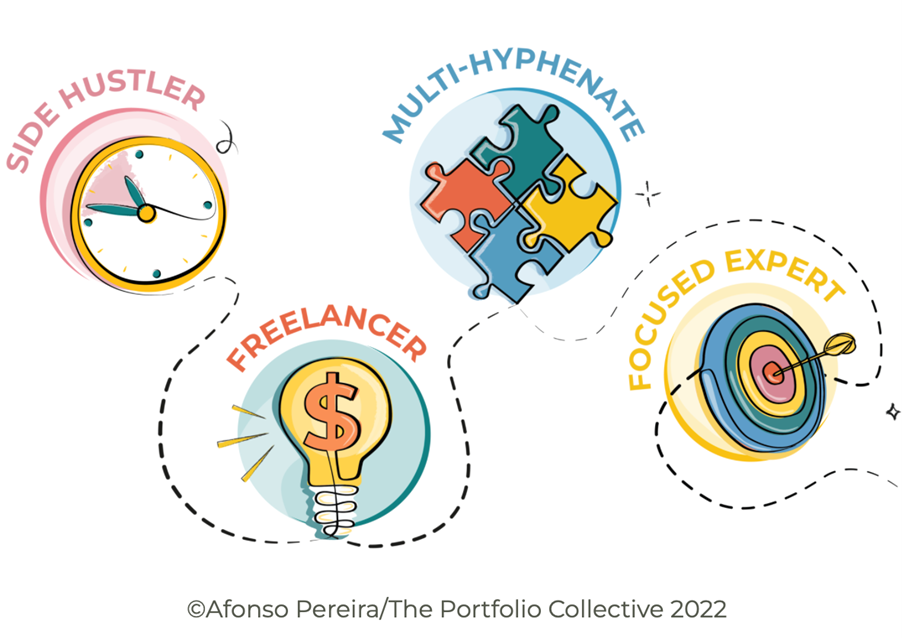
There are loads of ways to do this. They range from sticking with some or all of your current career and setting up a side hustle to freelancing across one or more fields you enjoy.
The Portfolio Collective has a useful overview of four portfolio career options and their 'best fit 'personalities.
Check your portfolio career personality here.
My client, Rachel, a Photographer, is a multi-hyphenate. She's built a satisfying portfolio career by reducing her commercial work to make space for teaching and mentoring in community and academic settings.
'This new combination of work satisfies different parts of me. I still get to be creative and do something I enjoy, and I've added something that was missing.
Now I'm making a positive contribution and helping people. My portfolio career feels more complete and more like me. I've also got flexibility, which is very important to me.'

Rhonda, Career tweaker
Rhonda, a committed comms professional, freelanced for a year before settling into a successful side hustle. Our coaching sessions helped her reframe her love of variety and change as a strength.
'Friends, colleagues, and family have always questioned why I didn't just stick with a 9-to-5 job, year in year out. My love of project work or one-off freelance jobs mystified them. I needed someone objective to help me work through "being OK" with reshaping the way I worked and with not conforming to others' expectations. Jo was that someone.'
My hands on experience of a portfolio career
In 2018, I spent a six-month period as a career change coach/researcher/project manager.
Here's what I learned about the charms and challenges of a portfolio career.

2. Step sideways – same sector, new role
Advertising Account Executive, Anna excelled at her job, and she loved it– until she didn't,
'Eventually, I saw that the deadline-driven environment and constant pressure to deliver brought out the worst aspects of my driven and perfectionist personality.
I lost perspective on what was 'normal' at work and what really mattered outside of work. I needed to reset my habits, boundaries, and work-life balance.
To do that, I had to remove myself from an environment I loved that had stopped working for me.'
Anna struggled to see how she might use her (very considerable) skills outside of her current role.
In our coaching sessions, Anna came to see that her skills existed independently of her Account Exec role. In fact, they were highly transferable. She set (and stayed with) some scary goals around asking for help to explore new options.
Anna is now Head of Marketing for a coffee company. In her words, she's 'shifted client-side.'
Having deliberately chosen to work for an organisation that values the lives people lead outside of work, Anna has successfully recalibrated both her personal and professional lives. When she started her new role, she was very intentional about how she wanted to approach things differently, setting clearer boundaries and ensuring she had a life outside of work.
In Anna's words, a successful career change, 'Isn't always about taking a step up. It's fine to step sideways to build new skills, learn new things and enjoy life outside of work.'
PR Professional, Gareth, knew something had to give. He'd outgrown his busy agency job, working with tech clients and startups.

Gareth, career builder
'The work I was doing no longer reflected my knowledge and experience. I'd hit a point where I wasn't growing, and I began to doubt my ability, which was confronting.'
Gareth wanted his work to have more impact. He also wanted to work in a more collaborative environment and culture.
'I needed to be somewhere that recognised my experience and gave me a seat at the table. I wanted to feel useful and heard. And I needed to feel like my work was genuinely contributing to the direction of the business.'
During our sessions, Gareth created a detailed description of his ideal job. This was a pivotal exercise. He used the description to filter roles he applied for and scaffold career change conversations with a range of people in his industry. Here's how that turned out.
'In one of these conversations, I asked my 'interviewee' if, hypothetically, her company would employ someone doing the things I'd outlined in my job description. To my surprise, she said, 'Yes', and asked me if I was looking for a job as they needed someone to do exactly that kind of work! So that's how I ended up where I am now: in an agency that totally plays to my strengths, with a structure that suits how I like to work.'
3. Stay put - same, same … but different
Switching to flexible or hybrid (home and office) working hours may save a job you love that's no longer compatible with your lifestyle. Alternatively, it can help you survive in a job you no longer love but can't quit … YET.
Many of my clients have bravely asked their employers if they can restructure their working week to improve their work-life balance or explore career change options.

If you're wondering if that high-profile, post-pandemic push back on flexible working has changed the landscape for most Australians, it hasn't.
Australian Human Resources Institute (AHRI) 2023 research found that requesting flexible conditions from day one was acceptable to 47% of employers, and an additional 17% of companies offered flexible working after 12 months. Furthermore, 43% of employers reported their flexibly employed staff as 'more productive' and a further 28% 'just as productive.'
Source: AHRI Research - Hybrid flexible working practices in Australian workplaces in 2023.
Enshrining the right to request flexible working hours also received a legal boost in 2023 via the Federal Government's 'Secure Jobs, Better Pay Bill.’
Stats and statutes aside, the best way to secure flexible working conditions is to present your manager with a dead good proposal to change your hours or responsibilities or both.
Be crystal clear on how this switch benefits everyone. You'll be even more creative and productive. If changing your responsibilities is part of your pitch, highlight how opportunities will open for others. Because who knows, somebody in your organisation may be aching to get into the areas you are keen to get out of.
So go ahead. Get your ducks in a row, then negotiate like a boss. Here’s some thoughts on how to ask for different hours.
Career tweaks - small moves, huge shifts
Anna, Astrid, Gareth, Rachel and Rhonda opted for career tweaks or sideways moves. They keep the things they loved about their careers - primarily creativity and impact. They set stronger boundaries around hours, aligned their work more closely with their values and gained greater flexibility and autonomy. They created opportunities to use their skills in new ways to support their communities.
Here's Anna on how her sideways shift saved her from burnout:
'I've redefined what I want from work and what I expect from myself.'
Here's Astrid on narrowing the scope of her career change and widening the sources of her satisfying life:
'A shift in mindset, values, or direction can be just as significant as a change in job title … not everything we are looking for must come from our careers. Sometimes, the fulfilment we seek lies in other areas of our lives. The key is knowing what you're really looking for so you can fully pursue it.'
Here's Gareth on stepping sideways into a role that fits him like a glove:
'I'm still in PR, but with a new focus. I work in a more senior, strategic capacity to support enterprise-level clients and contribute to their business growth. I'm using the same skill set in a way that feels more aligned with where I'm at in my career. So not so much a grand reinvention – more a career reset.'
Here's Rhonda on what to do when your 'off-beat' choices raise eyebrows:
'Don't let others set your path – back yourself to know what's right for you.’
Here's Rachel on the joy and value of small steps and surprising ideas:
"I started trying things out in small ways. I also stayed open to different, often 'unthought of' ideas that gelled with my aims and values. This is how I found my teaching position. It matched all my criteria."
These five career tweakers made changes that recalibrated their personal and professional lives and delivered more of the things that light them up. If you'd like a fun and perhaps revealing exercise on how this looks for you and you're OK with handing over your email, try author Sahil Bloom's quiz to reveal your current stores of the 5 Types of Wealth (spoiler alert they're 'Time', 'Social', 'Mental', 'Physical', and 'Financial'.) Take the quiz here.
Need help figuring out the scope and size of your career change? Book a chat.
Hi, I’m Jo Green, a Career Change Coach.
I help thoughtful professionals who feel stuck or unfulfilled in their work find a clearer direction and move into work that feels meaningful and aligned with who they are.
Since 2016 I’ve supported hundreds of people to reshape their careers – whether that means changing roles, starting something new, or finding work that contributes more positively to people or the planet.
If you're thinking about a career change and want structured support, you can learn more about my career change coaching here.
Or you’re welcome to book a free 20-minute consultation to talk about where you’re at and whether coaching could help.